Sand Perch Fishing in Englewood FL Waters
Sand Perch Fishing in Englewood - What to Expect

Fishing Charter by Captain Tim Hermus in April

- Book Our Englewood Fishing Charters Today!


Summary
Join Captain Tim Hermus of MM Charters for a rewarding fishing charter in Englewood where sand perch are abundant and eager to bite. This Saturday in April offers perfect conditions to learn effective sand perch techniques while exploring productive local waters. Sand perch fishing combines accessibility with genuine challenge, making it ideal for anglers seeking both action and skill development in Florida's coastal ecosystem.
Fishing Charter with Captain Tim Hermus - Rates & Booking
Captain Tim Hermus of MM Charters on Saturday, April 11 specializes in inshore fishing experiences targeting sand perch and other species throughout Englewood waters. Contact MM Charters directly to inquire about current rates, group sizes, and availability for your fishing adventure. Captain Hermus brings local knowledge and proven techniques to help you connect with productive fishing grounds and improve your catch rate.
Highlights of Sand Perch Fishing
Sand perch fishing near Englewood delivers consistent action and genuine learning opportunities. These fish respond well to live bait and light tackle, providing immediate feedback that helps anglers refine their skills. The shallow to moderate depths where sand perch congregate make them accessible while still presenting enough challenge to keep experienced anglers engaged throughout the day.
Englewood's coastal waters offer excellent conditions for targeting these species, with varying bottom structure that creates ideal habitat for sand perch populations. The relatively calm inshore environment allows for methodical presentation and observation, making these trips valuable for understanding fish behavior and environmental factors that influence feeding patterns.
Local Species Insights: Sand Perch
Sand perch are a popular inshore species found throughout Florida's coastal waters, particularly in areas like Englewood where sandy and mixed bottom habitats provide ideal conditions. These fish typically inhabit shallow to moderate depths, ranging from 10 to 40 feet, where they hunt along the bottom for small baitfish, crustaceans, and other prey items. Understanding sand perch behavior helps explain why certain techniques and locations prove more productive than others.
Sand perch exhibit distinct feeding patterns that change throughout the day and with tidal movement. They tend to feed more aggressively during slack tide periods and in the hours surrounding tide changes, as moving water concentrates their prey and increases feeding opportunities. Light and weather conditions also influence their willingness to bite, with overcast days often producing better action than bright, clear periods. Sand perch respond to natural presentation of live bait, as they hunt by sight and vibration detection rather than relying on aggressive striking behavior.
The shallow inshore environment where sand perch thrive creates an excellent learning laboratory for developing core fishing skills. Success with this species requires attention to bottom contact, subtle rod movement, and patience in waiting for the telltale tap of a feeding fish. The consistent action typical of sand perch fishing builds confidence and helps anglers develop the sensitivity needed to detect strikes from other inshore species. Whether you're targeting sand perch for the first time or looking to refine your technique, their abundance and willingness to feed make them ideal for focused practice sessions.
Englewood's geographic position along Florida's Gulf Coast provides access to multiple water systems and bottom types that support healthy sand perch populations. The local knowledge that experienced guides like Captain Tim Hermus possess includes understanding which areas consistently hold fish, how seasonal changes affect distribution, and which techniques produce best results given current conditions. This local expertise transforms a fishing trip into an educational experience where you gain transferable skills applicable to other inshore fishing scenarios.
Plan Your Fishing Day
A typical sand perch fishing charter with MM Charters involves navigating to productive grounds, setting up on structure or bottom suitable for these fish, and employing consistent presentation techniques throughout the session. Bring appropriate clothing for weather conditions, sunscreen, and polarized sunglasses to improve your ability to see fish and structure. Light to medium tackle works well for sand perch, allowing you to feel subtle takes and enjoy responsive fight quality. Contact Captain Hermus ahead of time to confirm what tackle and bait are provided versus what you should bring, ensuring you're fully prepared for a productive day on the water.
Fishing in Englewood: Sand Perch
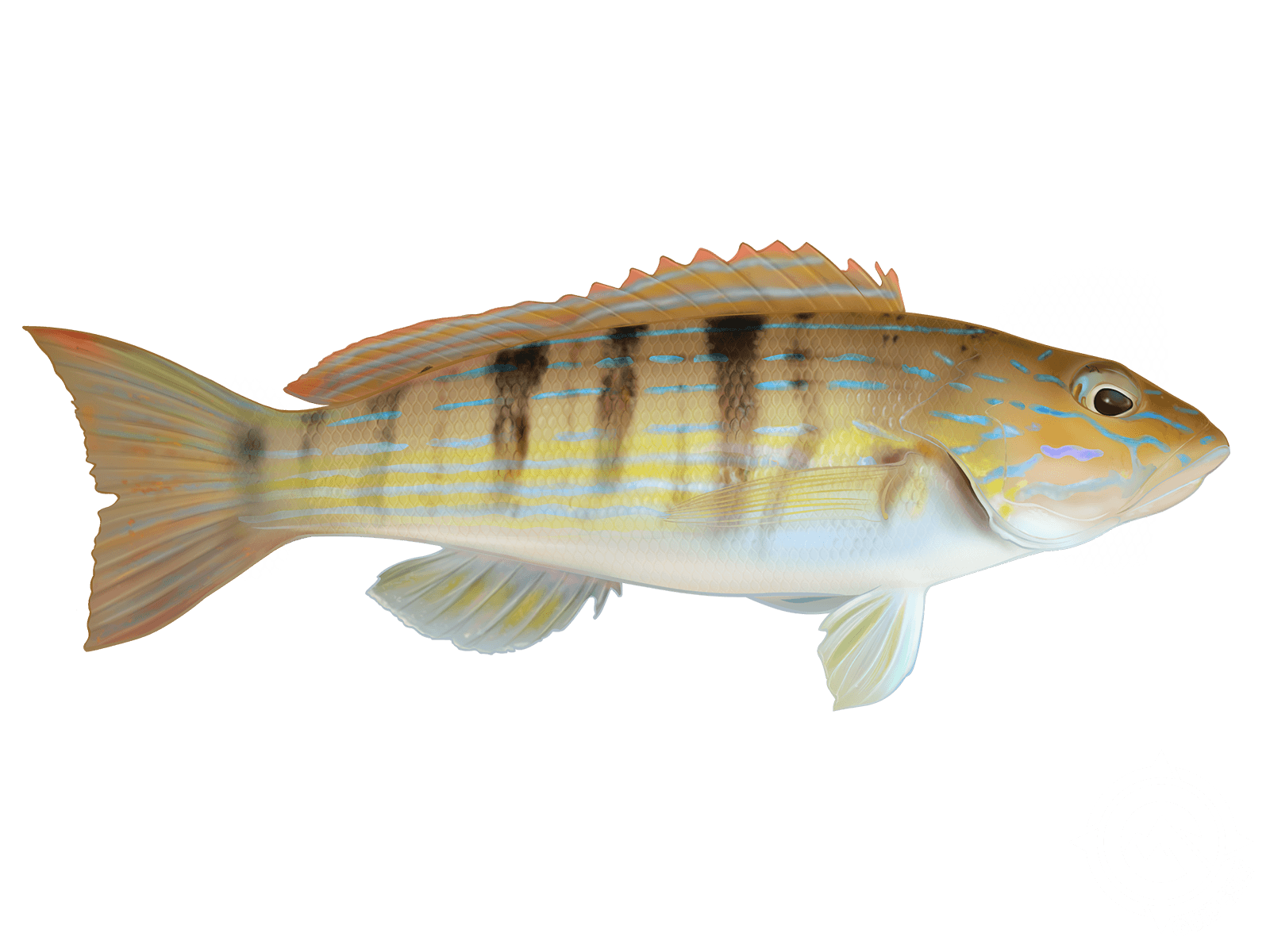
Sand Perch Overview
The Sand Perch (Diplectrum formosum) is a fascinating member of the Serranidae family, part of the larger order Perciformes, and represents one of the Atlantic coast's most accessible yet often overlooked panfish species. Also known as sand sea bass, sandfish, or squirrelfish, this small but spirited inshore fish has earned a special place in the hearts of coastal anglers and marine enthusiasts. What makes the Sand Perch truly interesting is its striking appearance—adorned with dark vertical bars, seven irregular horizontal blue lines, and a distinctive midline stripe that culminates in a dark spot at the tail base. These territorial little fighters are commonly found in shallow bays, over sandy and rubble substrates, and around coastal structures from Florida to the Carolinas and beyond, making them a reliable target for both experienced anglers and newcomers looking to experience the thrill of saltwater fishing.
Sand Perches are beloved among local fishing communities because they're accessible, plentiful in the right habitats, and offer an exciting, if brief, battle on light tackle. Their behavioral quirks—such as rapid color-changing abilities and solitary territorial habits—make them endlessly entertaining to observe and pursue.
Sand Perch Habitat and Distribution
Sand Perches are benthic creatures that call shallow, warm inshore waters home. These fish prefer to inhabit areas with rubble or sand substrates, typically found at depths ranging from a few feet down to approximately 262 feet, though they're most commonly encountered in shallower zones. They favor shallow bays, seagrass beds, rocky areas, and reefs where they can establish and defend their territories. Sand Perches also thrive around wrecks and deep channels, and they have a preference for living in holes dug into sandy bottoms—these burrows serve as their shelters when predators approach. The species is native to Atlantic coastal waters and shows a strong affinity for inshore environments where food is abundant and suitable substrate is available. These fish are notoriously territorial and do not school like other fish species; instead, they remain isolated, defending their chosen patches with surprising aggression.
Sand Perch Size and Weight
Sand Perches are modest in stature, which is part of their charm as a panfish target. Typical specimens range from 4 to 11 inches in length, with most caught fish falling between 5 and 9 inches. In terms of weight, you can expect these little fighters to tip the scales at 1 to 2 pounds, depending on their age and overall condition. Despite their small size, they put up a spirited fight on appropriate tackle. The species reaches sexual maturity at around 2 to 3 years of age and typically lives up to 6 or 7 years in the wild, allowing for multiple generations within an angler's fishing career.
Sand Perch Diet and Behavior
Sand Perches are ambush predators with an opportunistic appetite, primarily hunting small fishes and crustaceans in shallow coastal environments. Their diet consists of small sea bass, sea robins, blennies, flatfishes, filefish, gobies, crabs, shrimp, and amphipods—essentially whatever small prey they can fit into their notably enlarged, curled-back lips and canine-toothed jaws. These predatory fish are highly territorial, establishing and fiercely defending feeding zones in their chosen habitats. Their behavior is marked by periods of relative inactivity punctuated by rapid feeding strikes when prey is detected. One fascinating behavioral trait is their ability to rapidly change the color and intensity of their stripe and bar patterns from pale to dark, likely serving as a form of communication or camouflage. Despite their aggressive nature toward competitors of their own species, Sand Perches fall prey to larger predators including groupers, snappers, red porgy, bull sharks, red drum, and various sea birds, making them an important link in coastal food webs.
Sand Perch Spawning or Seasonal Activity
Sand Perches display an intriguing reproductive biology that sets them apart from many other fish species. They are classified as simultaneous hermaphrodites, meaning their gonads contain both male and female reproductive tissues separated only by a thin membrane. Despite this dual sexual capability, they cannot self-fertilize and must engage in reproductive interactions with other individuals. The species typically matures sexually at 2 to 3 years of age, with peak spawning activity occurring during warmer months when water temperatures rise and prey availability increases. Seasonal activity patterns align with typical coastal fish behavior, with increased feeding and movement during spring and summer months when water temperatures climb, and reduced activity during cooler winter periods.
Sand Perch Techniques for Observation or Capture
Method 1: Line and Hook with Live or Cut Bait — The most accessible and popular technique for capturing Sand Perches involves using a simple rod and reel with medium-light tackle, armed with fresh shrimp or cut squid as bait. Cast your offerings near rocky bottoms, around pilings, and along the edges of seagrass beds where these fish establish their territories. Use a small hook—sizes 2 to 1/0 work well—and keep your presentation close to the substrate where Sand Perches hunt. Fish the shoreline, near small boats, around bridges, and anywhere structure interrupts the sandy or rubble bottom. Patience is key; allow your bait to settle and remain relatively stationary, as these territorial fish often strike with confidence once they claim your offering.
Method 2: Cast Net Deployment — For anglers interested in live-capturing Sand Perches for observation or food, a cast net proves highly effective in shallow bays and over known feeding grounds. A 4- to 6-foot net with quarter-inch mesh works well for this species. Locate areas with sandy bottom and shallow structure, then cast your net in an arc, allowing it to sink fully before retrieving. This method requires some practice but rewards anglers with live, undamaged specimens and offers an engaging, skill-based alternative to rod-and-reel fishing.
Method 3: Light Tackle Jigging — Vertical jigging with small, natural-colored jigs (1/8 to 1/4 ounce) tipped with fresh shrimp can be incredibly productive, especially around wrecks, deep channels, and rocky structures. Drop your jig to the bottom, then employ short, rhythmic lifts to mimic fleeing prey. Sand Perches respond aggressively to this presentation, and the technique allows you to explore deeper habitat than surface casting. In coastal areas from the Carolinas to Florida, spring and early summer represent prime jigging seasons when these fish move into shallower waters.
Sand Perch Culinary or Utilization Notes
Sand Perches hold good odds for food quality and are prized as a panfish despite their modest size. The flesh is white, flaky, and surprisingly palatable, offering a mild, slightly sweet flavor that appeals to many diners. Because of their size, multiple fish are typically needed for a proper meal, but their abundance in suitable habitat makes this achievable for any dedicated angler. They're ideally suited for pan-frying whole or filleted, and their bones are small and manageable. From a nutritional standpoint, Sand Perches provide lean protein and beneficial omega-3 fatty acids. Sustainability-wise, the species' native status and prolific reproduction in coastal ecosystems make it an environmentally sound choice for harvest in appropriate quantities. Shrimp trawlers inadvertently capture these fish regularly, and they've long been valued by commercial operations and recreational anglers alike.
Sand Perch Frequently Asked Questions
Q: What is the best bait for Sand Perch?
A: Fresh or frozen shrimp is the top choice, followed closely by cut squid. These baits trigger aggressive feeding responses due to their natural occurrence in Sand Perch habitat and the scent they disperse in the water column. Small live baitfish like gobies or blennies can also prove effective.
Q: Where can I find Sand Perch near coastal fishing areas?
A: Look for Sand Perch over sandy and rubble substrates in shallow bays, around seagrass beds, near bridge pilings, and along rocky areas in inshore waters. In the Carolinas and Florida, they're particularly common in depths from 5 to 30 feet, though they inhabit waters as deep as 262 feet. Focus your efforts during warmer months when these fish are most active.
Q: Is Sand Perch good to eat?
A: Yes—Sand Perch ranks as good eating. The white, flaky meat has a mild flavor and suits pan-frying or filleting. You'll typically need several fish to make a substantial meal due to their 4- to 11-inch size, but their abundance makes this manageable. They're a sustainable choice for harvest and have been valued as food fish for generations.
Q: When is the best time to catch Sand Perch?
A: Spring through fall represents prime Sand Perch season, with peak activity during warm-water months (May through September). These fish are less active during cooler winter periods but can still be caught year-round in appropriate habitats. Early morning and late afternoon fishing typically produces good results, as with many coastal species.
Q: How do I distinguish Sand Perch from the dwarf sand perch?
A: The key difference lies in spine arrangement. Sand Perch spines radiate from two distinct areas, while dwarf sand perch spines diverge from a single center point. Examining the dorsal fin area closely will immediately reveal which species you're observing.
Q: Why don't Sand Perch school like other fish?
A: Sand Perches are highly territorial by nature, establishing and aggressively defending individual feeding zones. This solitary behavioral pattern means you'll encounter individual fish rather than schools, which influences fishing strategy—casting to specific habitat features rather than searching for large groups often proves more effective.